Heart Rate Variability (HRV) is the time between heartbeats measured in milliseconds(ms). Contrary to what most believe, our hearts do not beat like a metronome, nor is it healthy if it does.
Our heart rate speeds up every time we inhale and slows down during exhalation, balancing the sympathetic and parasympathetic nervous systems. It also reacts to internal and external factors such as mood, temperature, exercise, an email from your boss, fighting an illness, or dealing with a chronic or acute injury.
A high HRV indicates that the body is recovered and prepared to tackle demanding physical and mental tasks.
A low HRV indicates that the body is in a high-stress mode and not as capable or prepared to complete demanding physical or mental tasks.
Why do we care?
By monitoring your HRV, you will know when you should train hard and when you should lay off. If your HRV is consistently low, you could attempt to lower it by adopting one or several habits listed below to help boost your recovery or take a few days off to rest before you get sick or injured. At the very least, your HRV will explain why you found your regular mountain climb so difficult when last week it felt like a breeze.
What can we do to help improve our HRV?
Get quality sleep and enough of it
Eat healthy and from a variety of food sources to ensure you are getting all the necessary vitamins and nutrients to repair your body and mind
Train really hard only once or twice a week
Take time every day to relax and wind down, both mentally and physically
Find your own ways to reduce or manage mental stress (meditation, breathing work, taking a bath, walk in nature are a few good things to try)
Understand that your body doesn’t differentiate between mental or physical stress
Take a rest day every 7 days and a recovery week every 2 to 3 weeks to give your body time to recover from the continued training
How do you measure your HRV?
You can measure your HRV every day with an apple watch for free. If you don’t have an apple watch, you can connect your Garmin heart rate strap to an app or use your smartphone’s camera to capture a moment in your day.
Q: Why should some form of strength training, hiking, running, walking, or cross-training be included in a cycling program?
A: Road cycling is gentle on the body, protects the joints, increases aerobic capacity, and burns calories. However, it does not increase muscle strength/hypertrophy above the waist, increase overall flexibility, improve mobility, or build bone density; all of which are crucially important, both as we age, and as a cyclist.
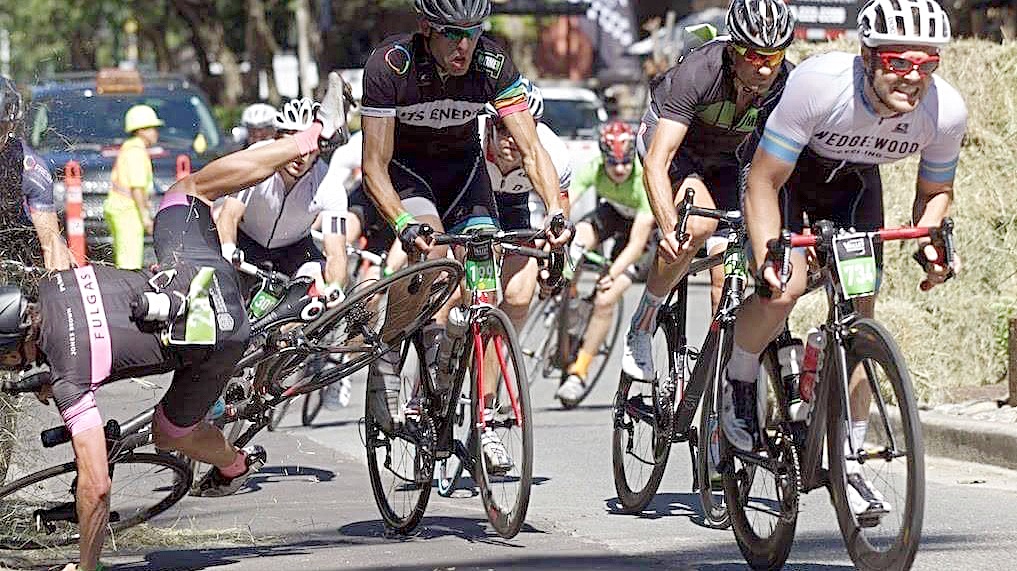
One of the realities of cycling is there is always the potential that we could crash. Competitive sports like soccer, tennis, and hockey help maintain quick reflexes and agility, which may help you get out of a sticky situation. Having a strong core and upper body strength help keep the bike upright (see last week’s post). A general strength training program or weight bearing exercises will help build stronger bones and add additional skeletal muscles to protect the joints. Should you have the misfortune of crashing, strong bones may help protect you so you only suffer superficial injuries.
Q: I’m short on time. How can I build bone density without adding in another workout?
A: The best exercise is the one that you will do and can easily fit into your schedule. If you don’t have enough time to add in a strength training program, then walking, hiking, or running will all increase bone density. Here are a few tips of how you can sneak it more of these types of exercises throughout the day:
Walk more steps throughout the day by parking further away or leaving the car at home.
Take the stairs whenever possible.
If you work from home, go for a walk around the block before starting your day and again at the end, just like you would if you had to commute to work.
Start the day with 15 mins of squats, pushups, rows, and some basic lunges or strength training work. Exercise first thing in the morning and keep it short so it doesn’t take up too much time and you are more likely to actually do it.
When meeting friends for coffee, go for a walk instead of sitting in a cafe.
Q: If have the time, what are the best strength training exercises that will complement cycling and also build strong bones?
A: Any weight-bearing exercise will turn on the processes to lay down more bone throughout your body. If you want to start a complementary weight training program, focus on the most significant muscles groups such as the core, quadriceps, hamstrings, and back. Unless you are training more than twice a week, avoid chest exercises and bicep curls as these muscles are often overworked and shortened due to too much time spent in flexion (driving, sitting, cycling, texting).
Or contact Kristina to book an assessment and personal training session.
Watching the Tour de France you wouldn’t think that a cyclist requires any upper body or core strength at all.
But I’m sorry to break it to you, if you are not a professional cyclists and no longer in your 20’s or 30’s, or 40’s, increasing the strength of your core and upper body will not only make your time on the bike more enjoyable but could also make you faster.
A cyclist with a weak core will compensate flexing at the wrist, locking the elbows, and shrugging their shoulders up to their ears. This acts as a brace for the upper body and puts pressure on the wrists and elbows, as well as increases tension into the shoulders. Maintaining this tight, locked position usually results in numb hands and a sore neck or upper back. In addition, a weak core results in additional strain to your lower back, causing more pain and discomfort both on and off the bike.
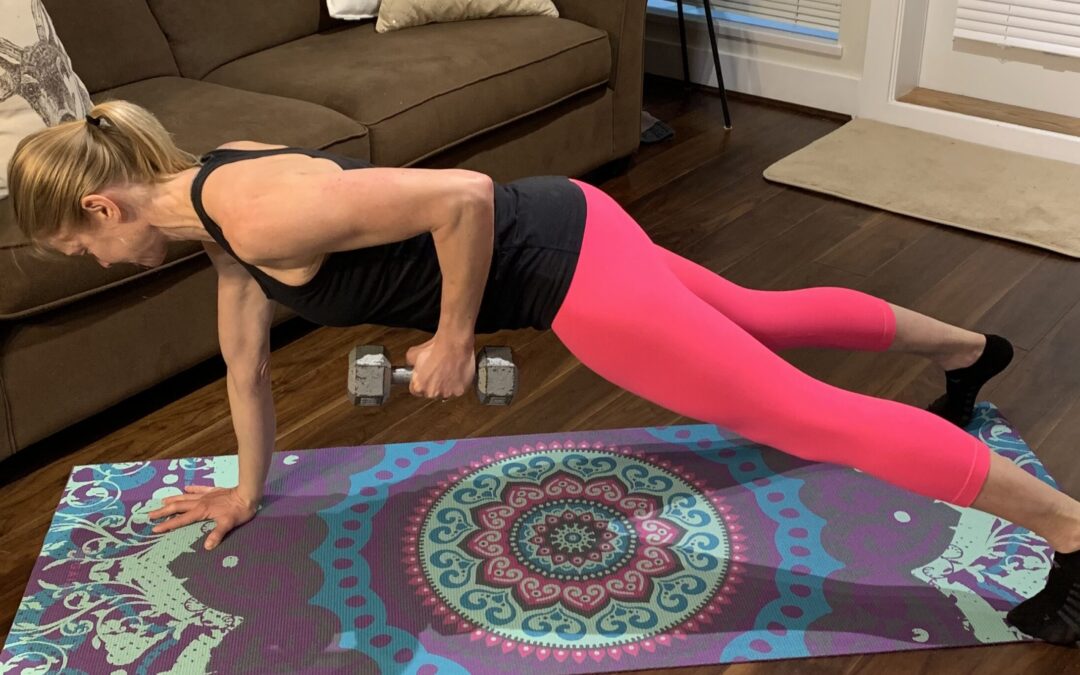
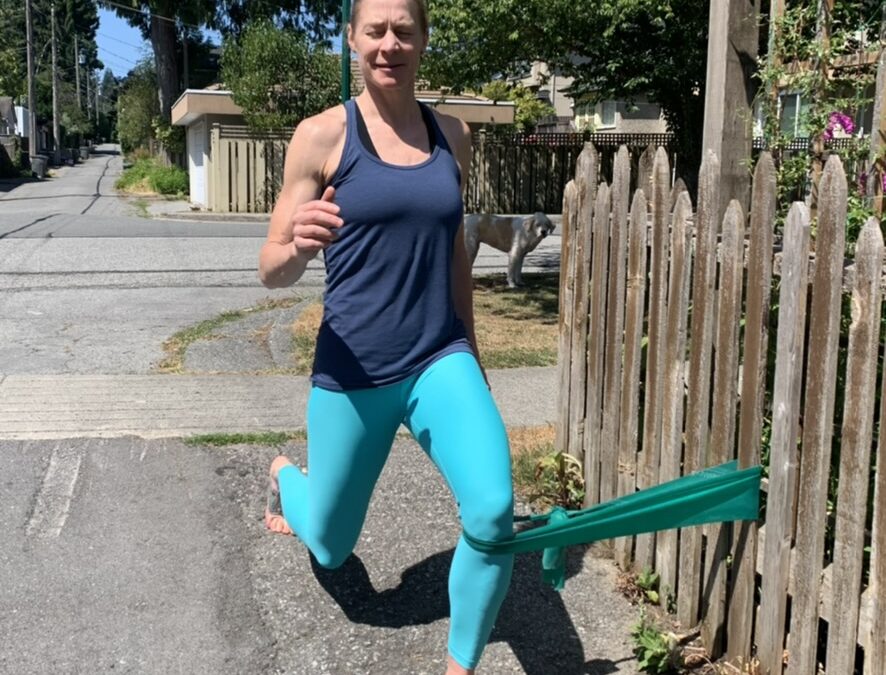
But it doesn’t have to be complicated or expensive. Start by adding these four exercises into your weekly routine.
AND WHY EVERY ENDURANCE ATHLETE OVER 30 NEEDS TO INCLUDE IT IN THEIR YEARLY TRAINING PROGRAM
There are SO many other systems in the body that are developing during weight training that does not get as much attention but are equally, if not more important, than bigger muscles.
Stimulate Growth Hormones and Reverse Catabolism This one is a HUGE, if not the biggest, reason why everyone over the age of 30 should lift weights. After we reach 25 years (yup – that was just a few years ago…), our cells stop growing and building independently. We are now mature humans and are beginning the 2nd stage of life, where the cells break down. Exercise stimulates a chemical reaction, reversing the ageing process and stimulating new growth.
Increase Bone Density Lifting weights is a stress on the bones. The body responds by laying down more bone, increasing overall bone density, reducing the chance of osteoporosis, and hopefully future fractures when we get older.
Increase Metabolism at Rest Our metabolism naturally lowers, so we need to eat less or move more to maintain the same weight as we age. However, building muscle uses more energy, increasing metabolism at rest. Yes, during sleep, the body is repairing muscles that use energy and helps with weight maintenance. Weight training also increases testosterone in both sexes. Testosterone is vital in managing weight AND maintaining a healthy libido. Testosterone levels lower as the day progresses, so training in the afternoon or evening will boost
NOTE: This does not happen with endurance sports, and HIIT exercises for women may have the opposite effect and reduce testosterone levels
Train the Neuromuscular System The first few times someone learns a new movement, the brain has to create a pathway, telling the muscles how to move as they should. The more repeated the movement, the more solid and subconscious this pathway becomes. Once the brain no longer has to tell the body to move in that new way consciously, then more weight, speed, power, or move to more complex movements.
Improve Mental Resilience and Confidence Weight training allows for small wins throughout the overall training goal. Building strength in the gym builds overall confidence and permits the athlete to tackle more complex exercises in the gym or sport.
Learn Pain By pushing to “do one more rep,” you are teaching your body the difference between good pain (make you more robust) and bad pain (injury).
Boost Energy Levels and Mood Even a short 20-minute workout will release endorphins which act as an anti-depressant as the brain releases dopamine, serotonin, and norepinephrine.
Reduce Risk of Injury Weight training is a controlled environment where paying attention to form and working within personal comfort levels can build overall body and core strength, which will help reduce injuries during sport.
One of the ways you become a better cyclist is through muscular adaptation. In very basic terms, this is what happens: The stress of training causes micro tears in your muscles. Your body then repairs the damage, which results in an inflammatory response (the swelling and tenderness you feel after a hard workout or race). The rebuilding process that follows creates stronger muscles—but onlyif the body has adequate time to heal. If you start your next hard ride when you’re not completely recovered your body is at a disadvantage. If you do this too many times you’ll grow more tired and gain less from each workout.
But recovery isn’t just about sitting on the couch with your legs up. It’s also about not going hard all the time and using rest days wisely. Strategies like low-intensity rides, stretching, yoga and massage will help your muscles recover faster.
10 ways to maximize every minute you spend in—and out—of the saddle.
1. The harder the workout = the more recovery time you will need. Generally speaking 48hrs should be enough, unless you made a huge jump in your training volume/intensity or you a hard race. Then you may need an extra day or two before you jump back into training.
2. To help your legs recover: elevate them, ice them or wear compression tights right after a hard/long ride.
3. Ride a short (45-60min) recovery ride the day after an intense ride. Keep your recovery rides light and easy, spinning the legs with very little intensity.
4. To replace the lost glycogen, eat immediately after all hard/long rides. Mainly carbs with only a small amount of protein and fat.
5. Stretch hip flexors, quads and hamstrings on a regular/daily basis.
6. Use your time off the bike to cross train with swimming or weight training focusing on core and upper body only. Keep the weights light on the legs. Hard leg training is best done in the off season.
7. Your body is trying to heal from the moment you get off the bike until you get back on again so plan meals ahead of time so you are eating every 3hrs, fuelling the fire.
8. Muscles do most of their repair during sleep. Get at least 8 hours of sleep on a regular basis.
9. If you are suffering from fatigue, frequent colds/flu, frequent injuries or just general fatigue, it may mean that you are overtraining. Take a few days off and ease back into it slowly.
10. Increase volume and/or intensity by only 10% each week.