AND WHY EVERY ENDURANCE ATHLETE OVER 30 NEEDS TO INCLUDE IT IN THEIR YEARLY TRAINING PROGRAM
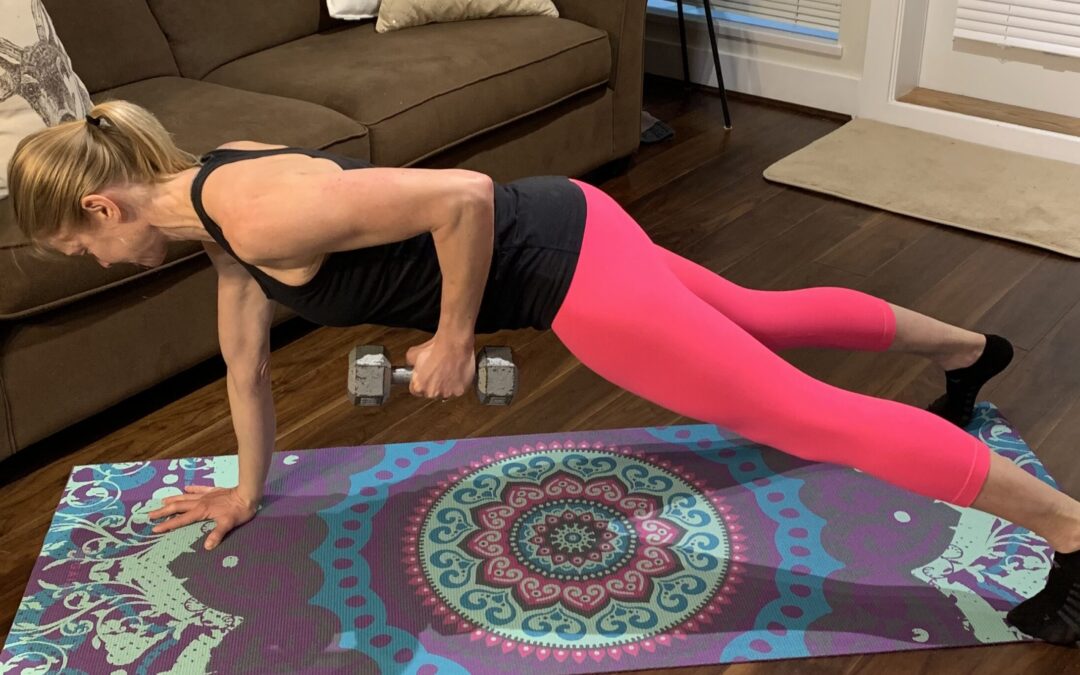
There are SO many other systems in the body that are developing during weight training that does not get as much attention but are equally, if not more important, than bigger muscles.
Stimulate Growth Hormones and Reverse Catabolism This one is a HUGE, if not the biggest, reason why everyone over the age of 30 should lift weights. After we reach 25 years (yup – that was just a few years ago…), our cells stop growing and building independently. We are now mature humans and are beginning the 2nd stage of life, where the cells break down. Exercise stimulates a chemical reaction, reversing the ageing process and stimulating new growth.
Increase Bone Density Lifting weights is a stress on the bones. The body responds by laying down more bone, increasing overall bone density, reducing the chance of osteoporosis, and hopefully future fractures when we get older.
Increase Metabolism at Rest Our metabolism naturally lowers, so we need to eat less or move more to maintain the same weight as we age. However, building muscle uses more energy, increasing metabolism at rest. Yes, during sleep, the body is repairing muscles that use energy and helps with weight maintenance. Weight training also increases testosterone in both sexes. Testosterone is vital in managing weight AND maintaining a healthy libido. Testosterone levels lower as the day progresses, so training in the afternoon or evening will boost
NOTE: This does not happen with endurance sports, and HIIT exercises for women may have the opposite effect and reduce testosterone levels
Train the Neuromuscular System The first few times someone learns a new movement, the brain has to create a pathway, telling the muscles how to move as they should. The more repeated the movement, the more solid and subconscious this pathway becomes. Once the brain no longer has to tell the body to move in that new way consciously, then more weight, speed, power, or move to more complex movements.
Improve Mental Resilience and Confidence Weight training allows for small wins throughout the overall training goal. Building strength in the gym builds overall confidence and permits the athlete to tackle more complex exercises in the gym or sport.
Learn Pain By pushing to “do one more rep,” you are teaching your body the difference between good pain (make you more robust) and bad pain (injury).
Boost Energy Levels and Mood Even a short 20-minute workout will release endorphins which act as an anti-depressant as the brain releases dopamine, serotonin, and norepinephrine.
Reduce Risk of Injury Weight training is a controlled environment where paying attention to form and working within personal comfort levels can build overall body and core strength, which will help reduce injuries during sport.
Even if you don’t “do” New Year’s Resolutions, the new year and a new training season require us to make some choices.
Which races or events do you want to ride, run, race? Do you want to hike the West Coast Trail or go on a cycling vacation with your friends? Or is your primary goal to keep up with your spouse, friends, grandkids?
If these are the types of decisions you are making, you need to start planning to arrive at your goal ready and prepared.
5 Rules, in their order of importance, that will help with any goal
Rule #1: Give Something Up (temporarily)
We have a limited number of hours per day. Adding in a new training program will require a considerable amount of your time. You will need to decide what you can temporarily give up to achieve this goal. Will it be less time on Netflix? Or will you keep on binging and hire someone to clean the house, walk the dog, prepare meals, or enlist your family to help with these chores?
“Yes, you can have everything you want. Just not all at the same time.”
Brianna Weist
Rule #2: Trust and Follow YOUR Plan
It doesn’t have to be expensive or complex, but you need to create a plan that will guide and motivate you throughout the journey towards your goal. Your plan will need to account for travel, family commitments, work obligations, and possibly a tiny buffer for the odd seasonal cold/flu or an unexpected obligation.
There are many different programs you can choose from, and everyone will have a different opinion of which one is the best. Instead of flip flopping throughout the season, you need to give your program 100% commitment before deciding if it does or doesn’t work for you. There’s no sense in choosing a plan, program, or coach if you don’t follow them.
Rule #3: Be Consistent
Not one particular day will make or break your training, but every day is important collectively. It takes consistency over a minimum of three to six months before you will start to see significant changes. So enjoy the journey. Any efforts to rush or rely on any last minute “cramming” will most likely only leave you injured.
Rule #4: Listen to Your Body
Listen hard as it can be deceiving. Are you feeling tired – or lazy? Are you overtraining – or getting sick? If you are unsure which it is, try training for ten minutes. This is usually enough to get the endorphins pumping, and your laziness will disappear. If it doesn’t, and you still feel unwell, it would be better to quit and take a nap instead. If you aren’t enjoying any of your workouts, as you are struggling to keep up, the program is too hard. You may need to completely abort your plan and choose one that will help you grow, not destroy you.
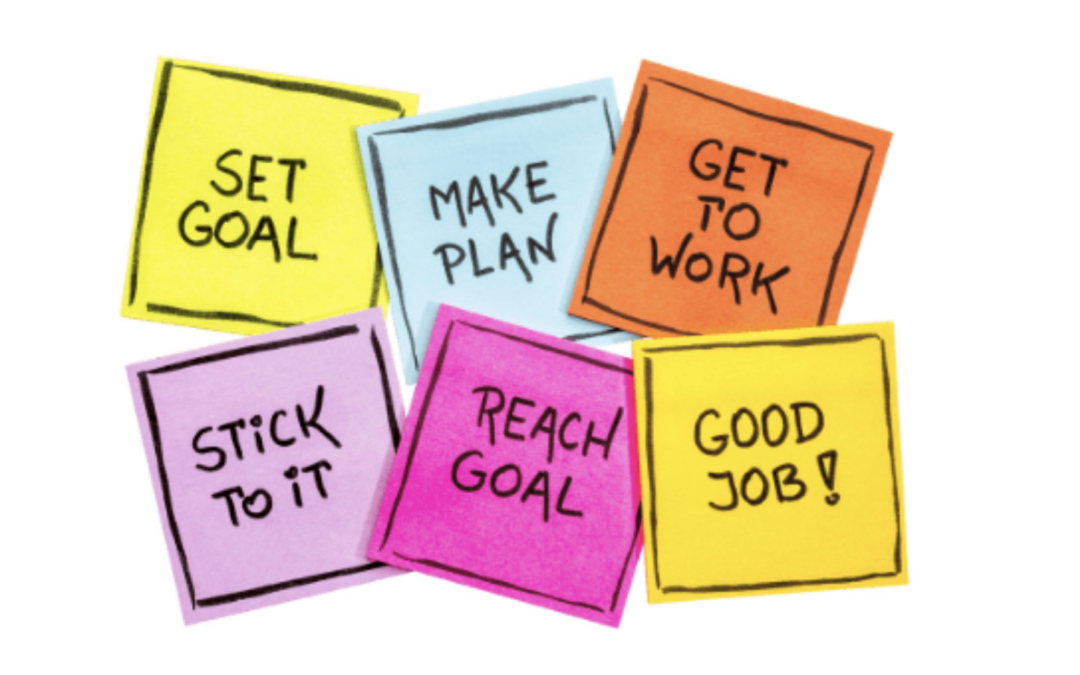
Rule #5: Write Down Your Goals, Recognize Victories, Reflect on Failures
Fitness progression is a slow process, and if you are not paying attention, many people fail to recognize the change in themselves. As they become fitter/faster/leaner, they unconsciously alter their goals to the next level, barely recognizing how far they have come. By writing down your goals, you can look back and celebrate the victories as you achieve them. Not only does this help with motivation, but it also helps to keep things in perspective. We can’t all be Tour de France riders, but we can get a personal best (PB)in an event, lose 5lbs, or complete ten pull-ups, whatever your goal may be.
If you didn’t achieve your goal, look back and try to uncover the reasons why. We often learn more about ourselves through failure then we do through our successes.
If you have signed up for a Fondo or event this year, you will want to follow a training program. The purpose of having a program is to ensure that your training progresses slowly but consistently enough to allow your body time to adapt to the training stress and grow stronger with each rest period. If your training plan is to ride whenever you feel like it for as long and as hard as you can, you aren’t doing yourself any favours and you could injure yourself along the way.
There are many different ways to go about getting a training plan and all of them have various benefits attached to them. All of them will get you to your goal of completing a Fondo. But usually one, or a combination of a few approaches will work better for your lifestyle than others.
Personal Cycling Coach
Hiring a personal coach to structure a detailed program is the perfect choice for someone who has specific goals and would like to optimize every hour of their training. As the athlete, you can simply ride, knowing that your coach has your program dialled for you. It is their job to analyze your heart rate and power zones, continually changing and adapting your program as you progress.
The downside to this is that you don’t get to learn how to ride in a group and it can be a bit lonely.
Cycling Club
If lack of motivation is a key factor to the success of your training program, joining a cycling club might motivate you more than someone emailing you to get out the door. Riding with a club also has the added advantage of teaching you how to ride in a group and you will find that you naturally push yourself to work harder when surrounded by other riders.
The downside is that you have to ride when the group rides and with whomever shows up that day, you are limited to the distance and destination of the what the group has decided to do, and you don’t have a training program.
Cycling Club Training with a Common Goal
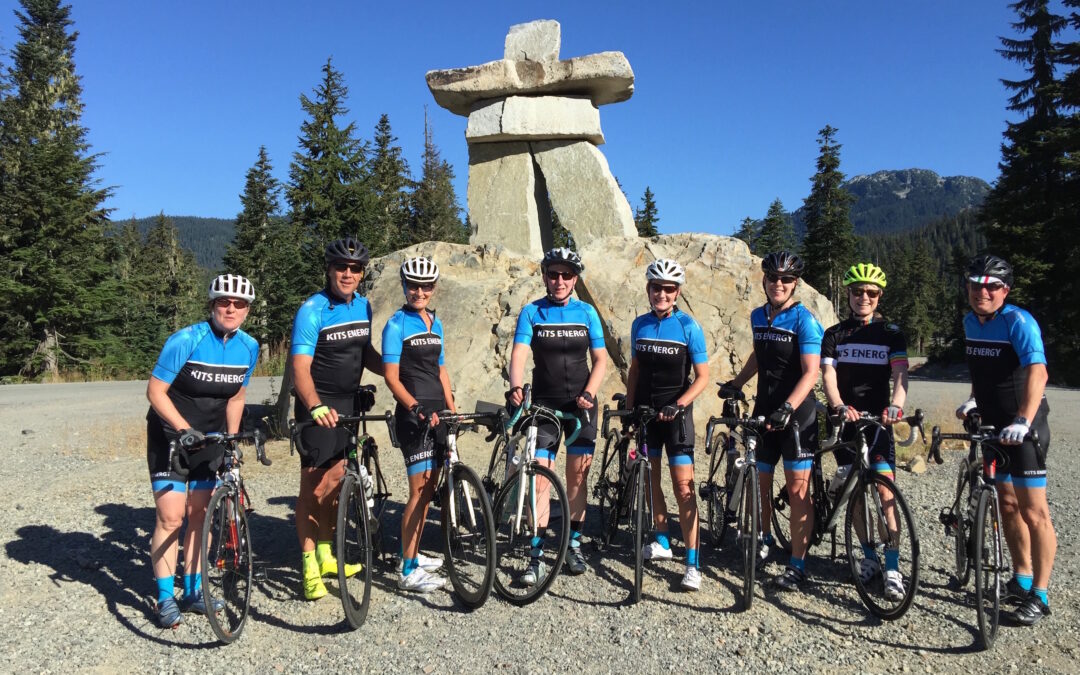
Joining a group like the Kits Energy Cycling Club where you ride with a group of people, knowledgeable coaches, and a training program designed to train you towards your goal covers all your bases. The group will motivate you to ride and give you plenty of opportunities to practise your group riding skills. The NCCP certified coaches will teach you all the skills you need to get you across the finish line and keep you accountable to training every week. The monthly training programs are made specifically for your level and with your goals in mind so that you progressively increase in distance and intensity each week.
The downside is that you have to be available for the day of the week that your group rides and coordinate the other training rides on your own.
Generic Online Training Program
If time is a major roadblock to training, you might want to look for a more flexible option such as an online training program. This is the cheapest option as you only pay for one program or you can even use one of the free programs online. Now you can choose whenever you want to ride and who you want to ride with.
The downside to this is that you are using a generic program that may be too easy or too hard for you. You also don’t have the advantage of learning from others, either in a group or from a professional.
Whatever method you choose; personal coach, club or online, any choice is better than no choice at all.
Many riders think of their finish time as the only goal in training. This often leads to disappointment as there are so many elements beyond our control which can alter our finishing time, without proving a clear picture on whether or not we have improved.
Completing a ride under the time you had anticipated is always exciting. But you won’t learn anything from the event if you don’t recognize the things you did well and the things you still need to work on. Having specific goals, beyond the finishing time, guarantees that no matter what your time is, you can still finish accomplishing a goal and learning from the experience. These specific goals should aim to not only maximize your strengths but also to improve on your weaknesses.
Each year I ask my riders to make a list of specific detailed goals for their main event or for the season. Afterwards, they can look back on these smaller goals and ask themselves, “Was I successful?” If yes, why? What did you do different? If no, why not? What do you need to change? Each year you will need to modify your goals so they are applicable for the year and in doing so you will aways be pushing yourself to the next level.
Examples of a goal beyond a finishing time, could be any or all of the following:
1. Nutrition – Finish the event having fuelled appropriately, keeping you energized for the entire ride. 2. Drafting – Not doing too much of the work, but staying close to the pack and sprinting when needed. 3. Pacing – Pace appropriately to finish without leaving anything in the tank but not blowing up halfway through. 4. Descending – Feel comfortable descending in a pack, not leading it and doing all the work. 5. Follow a plan – Follow a training plan, and following it on event day instead of your emotions. 6. Climbing and cadence– Pacing appropriately for the climb, staying with the group and/or climbing at a higher cadence, not mashing the pedals. 7. Match burning – Know how big your matchbook is and when you should burn them.
Once you have identified which elements you would like to work on, practise them during training. Although we all want to be the fastest in EVERY ride, training is just that – training. So this is your time to try out new things and push the limits. If you try something new and you fail in training – TERRIFIC !! It is only through failure that we learn how to succeed, so best to do in training, instead of your event.
Sadly, every one of us knows someone who suffers from mental illness. We don’t think that riding our bikes will be the cure, but in doing so we are hoping to increase awareness and raise money so that those who are in need of help will be able to get it promptly.
Will you join us next year?
We ride the 60km distance as a club but you can ride any distance that you are comfortable with.