Riding in a fondo or an organized event is much different than a weekend long ride.
If your goal is to make the most of the perks, like closed roads, fantastic food stops, and beautiful scenery, then your ride time will likely be slower and you will be out in the elements longer as you soak it all in.
If your goal is to use the event as an opportunity to push yourself to achieve a Personal Best (PB), then you will need to prepare for that type of intensity.
Pacing yourself is essential to having a successful day, whichever way you decide to ride..
#1. Learn the route
You need to know the route before planning your overall pacing strategy. Can you use up all your matches, knowing that the last 40km is a downhill coast, or do you need to save some? Are you drafting or riding alone? Where are the rest stops? How many will you use and when?
#2. Draft – or not
Watch your speed when riding in the middle of the back of the pack. If it feels comfortable and you are riding way faster than you ever have – enjoy the ride! Don’t get fooled into thinking you can ride faster and waste energy pulling at the front. Take the opportunity to cruise and recover. If you are faster (than the group you are in), wait for a smaller group to break away at the front and go with them, or wait for a faster group to catch up.
#3. Know yourself
Knowing and listening to your body is more complicated than it sounds. The body can fool even the most experienced riders; therefore, you need to plan the following ahead of time:
1. What, how much, and how often will you eat and drink?
2. How often can you push into Zone 4/5 without blowing up?
3. How many breaks do you need and for how long?
4. If you “feel” like the pace is relaxed or see that your power output is low – is it really too slow? Refer back to #1 and 2.
#4. Patience, Practice, and Perseverance
Learning how to pace is not easy, and the more gadgets you have, the more complicated it gets. Executing the perfect pacing strategy takes time, practice, and patience.
If you want to learn more about pacing, how to use a power meter (or heart rate monitor) and other training tips, I suggest the following books:
The Power Meter Handbook by Joe Friel
Training and Racing with a Power Meter by Hunter Allen and Andrew Coggan
As I write this, I am contemplating participating in 2 running races this spring, an 8K and a 10K, both being only a week apart! Even as I am telling you, I can’t believe that I am even considering this!! If you had asked me a year ago, I would have told you that I couldn’t even “run” 1K, let alone “race” two races back to back! This all changed 15 months ago when I met Kristina.
Being a 55 year old busy professional I had very little time to take care of myself. As an international trainer, speaker, executive coach and an entrepreneur, my schedule can become so hectic that it is probably better suited to a professional 20 years younger.
I have difficulty saying “no” to work; it is even more difficult to say “yes” to taking care of me. I did not have a regular fitness routine as I found it impossible to add exercise into my already hectic life.
My busy life was beginning to take its toll. My recreational activities (rowing, kayaking and sailing) were not compatible with the travel my career was demanding and I was searching for a way to combat fatigue. I needed to stay focused and alert with my clients as well as stave off the affects of too many restaurant dinners. When I see myself at 80 years old, I envision myself climbing in and out of my rowing shell with grace. I have the desire to remain flexible, strong and agile throughout my entire life.
It was this desire to maintain my flexibility, agility and strength which prompted me to start training with Kristina. When we met just before Christmas in 2006, my goals were to: find a training schedule that worked with my busy life, lose a few inches, and increase my strength, flexibility and energy. Kristina designed a program that included weight training, core work, a walk/run program and a goal to climb the Grouse Grind in April! The program was designed for me to take on the road, at home or at my vacation property and in the gym.
Here is the amazing part. What began as only 1 minute of running and 5 minutes of walking (repeated 5 times) slowly grew until one day I realized that I was running for 30 minutes, straight!! I had never run for 30 minutes before. I never knew I could and honestly I didn’t even think that I had wanted to – until I actually did it!
But funny enough, I still didn’t think of myself as a runner. In fact I couldn’t quite realize what I had accomplished. But I also couldn’t ignore the achievement. It was awesome to realize what a consistent practice of getting out there and putting one foot in front of the other could do. I had never experienced the power of this kind of slow, steady, consistent practice.
In June we hiked the Grouse Grind. It was hard but I was ecstatic! And after that (with a great deal of encouragement from Kristina) I began training for my first 5KM race – the CIBC Run for the Cure in late September. I was nervous and excited. One part of me was saying “What are you thinking? You are not a runner!” But Kristina gently prodded, encouraged me and worked with me to build the foundation that was necessary to run 5km and to run it well. She encouraged me to see it as “my” race and to do the best “I” could. She told me to pay attention to my body and run “my” race not to race the person beside me which is hard for competitive types to do! I finished in 33 minutes.
Running is now something I can’t do without. Even when I am not training for a specific race, I run at least 3 days a week for 35 – 40 minutes. It has become as much a part of my life as eating and breathing. I love the way I feel, the way I look, my increased energy, the strength I have gained and my increased level of fitness and flexibility. These were my original goals which I can proudly say that I have accomplished.
It is a whole new world out there as I continue to learn more about my body and what it can do. Every day I keep feeling better and stronger. Now my runs are the first thing to go on my schedule.
It is Kristina’s goal to “help you find your inner athlete.” I originally thought her goal applied to everyone but me. But I was wrong. With wisdom, patience, compassion and thoughtfulness, Kristina worked with me in a way that was uniquely suited to me, my life, goals and abilities. Not only did I complete the goals I had set in 2007 but without even realizing it, I also became a runner!
Even if you don’t “do” New Year’s Resolutions, the new year and a new training season require us to make some choices.
Which races or events do you want to ride, run, race? Do you want to hike the West Coast Trail or go on a cycling vacation with your friends? Or is your primary goal to keep up with your spouse, friends, grandkids?
If these are the types of decisions you are making, you need to start planning to arrive at your goal ready and prepared.
5 Rules, in their order of importance, that will help with any goal
Rule #1: Give Something Up (temporarily)
We have a limited number of hours per day. Adding in a new training program will require a considerable amount of your time. You will need to decide what you can temporarily give up to achieve this goal. Will it be less time on Netflix? Or will you keep on binging and hire someone to clean the house, walk the dog, prepare meals, or enlist your family to help with these chores?
“Yes, you can have everything you want. Just not all at the same time.”
Brianna Weist
Rule #2: Trust and Follow YOUR Plan
It doesn’t have to be expensive or complex, but you need to create a plan that will guide and motivate you throughout the journey towards your goal. Your plan will need to account for travel, family commitments, work obligations, and possibly a tiny buffer for the odd seasonal cold/flu or an unexpected obligation.
There are many different programs you can choose from, and everyone will have a different opinion of which one is the best. Instead of flip flopping throughout the season, you need to give your program 100% commitment before deciding if it does or doesn’t work for you. There’s no sense in choosing a plan, program, or coach if you don’t follow them.
Rule #3: Be Consistent
Not one particular day will make or break your training, but every day is important collectively. It takes consistency over a minimum of three to six months before you will start to see significant changes. So enjoy the journey. Any efforts to rush or rely on any last minute “cramming” will most likely only leave you injured.
Rule #4: Listen to Your Body
Listen hard as it can be deceiving. Are you feeling tired – or lazy? Are you overtraining – or getting sick? If you are unsure which it is, try training for ten minutes. This is usually enough to get the endorphins pumping, and your laziness will disappear. If it doesn’t, and you still feel unwell, it would be better to quit and take a nap instead. If you aren’t enjoying any of your workouts, as you are struggling to keep up, the program is too hard. You may need to completely abort your plan and choose one that will help you grow, not destroy you.
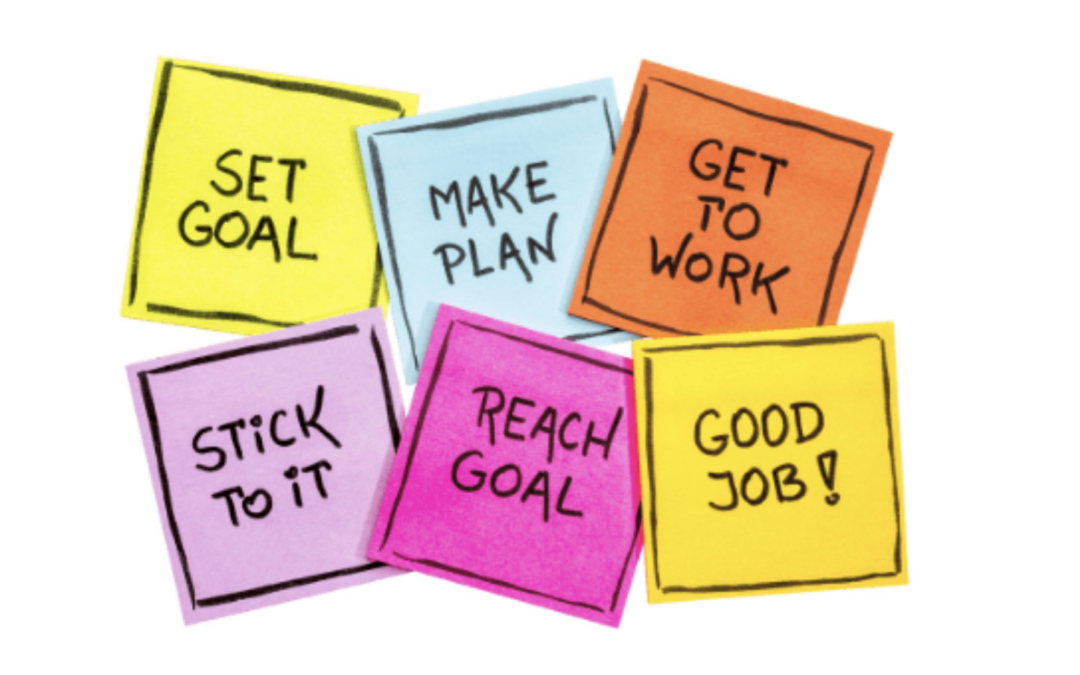
Rule #5: Write Down Your Goals, Recognize Victories, Reflect on Failures
Fitness progression is a slow process, and if you are not paying attention, many people fail to recognize the change in themselves. As they become fitter/faster/leaner, they unconsciously alter their goals to the next level, barely recognizing how far they have come. By writing down your goals, you can look back and celebrate the victories as you achieve them. Not only does this help with motivation, but it also helps to keep things in perspective. We can’t all be Tour de France riders, but we can get a personal best (PB)in an event, lose 5lbs, or complete ten pull-ups, whatever your goal may be.
If you didn’t achieve your goal, look back and try to uncover the reasons why. We often learn more about ourselves through failure then we do through our successes.
Many riders think of their finish time as the only goal in training. This often leads to disappointment as there are so many elements beyond our control which can alter our finishing time, without proving a clear picture on whether or not we have improved.
Completing a ride under the time you had anticipated is always exciting. But you won’t learn anything from the event if you don’t recognize the things you did well and the things you still need to work on. Having specific goals, beyond the finishing time, guarantees that no matter what your time is, you can still finish accomplishing a goal and learning from the experience. These specific goals should aim to not only maximize your strengths but also to improve on your weaknesses.
Each year I ask my riders to make a list of specific detailed goals for their main event or for the season. Afterwards, they can look back on these smaller goals and ask themselves, “Was I successful?” If yes, why? What did you do different? If no, why not? What do you need to change? Each year you will need to modify your goals so they are applicable for the year and in doing so you will aways be pushing yourself to the next level.
Examples of a goal beyond a finishing time, could be any or all of the following:
1. Nutrition – Finish the event having fuelled appropriately, keeping you energized for the entire ride. 2. Drafting – Not doing too much of the work, but staying close to the pack and sprinting when needed. 3. Pacing – Pace appropriately to finish without leaving anything in the tank but not blowing up halfway through. 4. Descending – Feel comfortable descending in a pack, not leading it and doing all the work. 5. Follow a plan – Follow a training plan, and following it on event day instead of your emotions. 6. Climbing and cadence– Pacing appropriately for the climb, staying with the group and/or climbing at a higher cadence, not mashing the pedals. 7. Match burning – Know how big your matchbook is and when you should burn them.
Once you have identified which elements you would like to work on, practise them during training. Although we all want to be the fastest in EVERY ride, training is just that – training. So this is your time to try out new things and push the limits. If you try something new and you fail in training – TERRIFIC !! It is only through failure that we learn how to succeed, so best to do in training, instead of your event.