Take an Epson salt bath for recovery

Take an Epson salt bath for recovery

The more you train, the more you need to recover.

Many athletes get so caught up closing activity rings, counting steps, competing in Strava challenges, or reaching a distance goal, that they forget to make recovery a priority. 

One form of recovery, that often gets overlooked is an Epson Salt Bath.

Especially in the cold winter months, a hot sudsy bath does sound pretty inviting. But, besides being relaxing, how else does it help you recover?

We don’t have many concrete scientific studies that support how an Epson Salt Bath helps recovery, but we do know that it works. On the most basic level, taking a warm bath helps calm the nervous system which has a ripple affect, allowing your body to direct it’s energy into repair mode.

If you want to take it a step further, if the athlete also uses this time to focus on breathing, or follows another form of relaxation technique such as listening to music or reading a novel, your brain has time to shut off and recharge. Think of your body like your iphone; it has a long battery life, but the more you use it, the longer you need to stop to recharge.

So what is it about the Epson Salts?

Dissolving epson salts in water releases magnesium and sulfate ions, which can be absorbed through the skin. Magnesium plays many crucial roles in the body and is required in more than 300 essential metabolic reactions in the body. Some of the most important roles for an athlete are:

regulates energy production aka improves performance

regulates muscle and nerve function

regulates blood sugar levels

regulates blood pressure

reduces inflammation

strengthens bones

reduces depression

improves digestion

helps release melatonin which helps you sleep

So, instead of thinking of your bath as a guilty pleasure, you can add it to your arsenal of recovery tools to make you faster, stronger, fitter, and healthier overall.

In the summer, we will talk about ice baths and contrast baths, which also have amazing benefits in aiding recovery, but much harder to convince when it is already cold outside.

10 tips to break sugar addiction

10 tips to break sugar addiction

scroll to bottom for cookie recipe

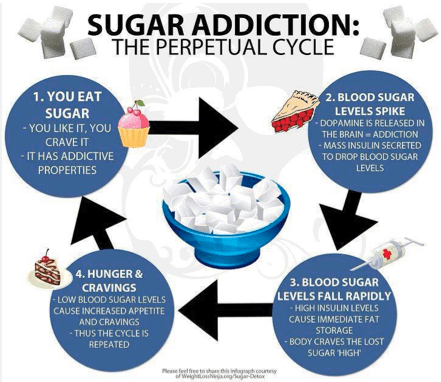
After several weeks of indulging over Christmas, it can be challenging to return to our usual, healthy way of eating. This is not just due to a lack of willpower. Physiologically, your body and brain are now programmed to want more sugar, making the cravings almost impossible to ignore. 

The brain demands sugar

Sugar fuels every cell in the brain. Your brain also sees sugar as a reward, making you want more of it. You reinforce that reward system every time you eat sugar, making it a tough habit to break.

And the body wants it’s share as well

As if that wasn’t enough, now your body also demands that you give it another hit. As insulin moves glucose out of the bloodstream and into your cells for energy, this rapid drop in blood sugar leaves you feeling wiped out and shaky, searching for more sweets to regain that sugar “high.”

Starch equals sugar

Think you don’t have a sweet tooth, but crave bagels, chips, crackers, or french fries? Highly refined starches are complex carbs that the body breaks down into simple sugars. When eaten without protein, fat, or fibre, starches can make blood sugar levels surge and crash, similar to a simple sugar bonk. 

So how do we break this cycle?

  1. Start Slow

January is notorious for making massive commitments to change our lives and diet, only to fail by February and give up.

Instead of going cold turkey on quitting sugar, do it gradually. Try cutting out one sweet food from your diet each week. For example, pass on dessert after dinner or eat one cookie instead of two.

2. Retrain your taste buds

Over time, you can train your taste buds to enjoy things that aren’t as sweet. Start by putting less sugar in your coffee, oatmeal, and baked goods. Over time your taste buds will change, and you will experience the same pleasure or “high” with less.

3. Change up your sugar choices 

Include more fruits and vegetables containing natural sugars, fibre, antioxidants, and essential vitamins. 

4. Educate yourself 

Check food labels. Watch out for items that list any form of sugar in the first few ingredients, or have more than 4 total grams of sugar per serving.

The word “sugar” sometimes goes by another name, like these:

  • Agave nectar
  • Brown rice syrup
  • High-fructose corn syrup
  • Dextrose
  • Evaporated cane juice
  • Glucose
  • Lactose
  • Malt syrup
  • Molasses
  • Sucrose
  • Honey

5. Add more protein and fibre

High-protein and fibre foods digest more slowly, keeping you feeling full for longer. They also don’t make your blood sugar spike the way refined carbs and sugars do. Good protein sources are chicken, yogurt, eggs, nuts, or beans. Good fibre sources are soaked chia seeds, oats, beans, lentils, berries.

Food combining (eating a high protein or fibre along with a high sugar food) will slow the release of insulin and help prevent a sugar crash. But the brain will remain in the same “sugar = reward” feedback loop.

6. Do NOT substitute with artificial sweeteners

Some studies suggest artificial sweeteners may leave you craving more sugar, which doesn’t help break your taste for sweets. Pay attention to your body. Are sweeteners making you crave even more sugar? 

7. Get enough sleep and rest

Many times we crave sugar because we are tired and looking for energy. In addition, if we are well rested, we can make better decisions and, therefore, better food choices.

8. Snack on exercise

It is usually around 2 or 3pm when our blood sugar drops and we start to crave something sweet. Instead of reaching for a cookie, get up and complete a short but vigorous form of exercise. Run up and down the stairs or whip off 10 fast push-ups or do burpees in your office. The quick adrenaline rush will boost your energy levels and curb the craving.

9. When baking, cut the sugar by half

Unless the recipe was designed for weight loss or a low-sugar diet, EVERY recipe I have found uses way too much sugar. As a general rule, I cut the sugar by half. If it is just for myself and my husband, I will continue to cut the sugar until I find how low I can go before he notices. 

10. Make it easy

Have tasty snacks and food available and easy to access, for when your next sugar craving hits. Some snack ideas are: celery sticks with peanut butter, yogurt and blueberries, hummus and any vegetable, apple and almond butter, raisins and almonds. Eat foods that you enjoy so you don’t feel deprived.

Here is my favourite healthy cookie recipe courtesy of Dr. Leslie Wicholas. Leslie is a psychiatrist and an avid cyclist who rides with Kits Energy. She also designed the food as Medicine program to treat depressive mood disorders and fibromyalgia at the Mood Disorders Association of BC.  I love these cookies so much that I double the recipe, so I always have a few in my freezer.

Chocolate Spice Cookies (gluten and dairy free)

by Leslie Wicholas, MD

2/3 cup baked cooked garnet yam. Remove the skin from the yam before using. (You can bake yams ahead of time and freeze them to use later)

1 egg

4 Tbsp mild flavoured olive oil

3 Tbsp dark maple syrup

1/3 cup coconut flour

1/4 cup oat flour

3 Tbsp cocoa powder

1.5 tsp cinnamon

1/8 tsp cayenne pepper

1/4 tsp baking powder

1/8 tsp salt

3 Tbsp dark chocolate chips

Bake yam at 400 degrees for 1 hour or until really soft. Fully cool in refrigerator before using.

  1. Pre heat oven to 350 degrees
  2. Mix the wet ingredients well.
  3. Combine dry ingredients and add to wet ingredients. Mix well. Batter will be sticky with a cake like batter consistency. It will firm up after baking.
  4. Grease cookie sheet with coconut oil. Scoop a spoon full of batter onto the sheet. Gently shape into cookies
  5. Bake for 20 minutes. Cookies should be firm, with a little “spring” when you touch it.

Makes 15 cookies

Keeps well in fridge for 3-4 days. Freezes well.

Deb Gooding

Deb Gooding

December 2022

Kristina is a gifted, experienced and skilled trainer. She recently developed an effective fitness program that not only supported but strengthened my unstable, weak knee. As a result, I am able to spend several hours skiing the bumps at Whistler.  

Thank you Kristina, you have inspired me to reach higher!

Q&A on Menopause

Q&A on Menopause

Earlier this year, we had a live Q & A with Jennifer Thompson from Herstasis.com, which was highly informative and answered many of the questions women have about menopause.

Some women will pass through this stage without skipping a beat, while others may suffer terribly.

If you are suffering from new and uncomfortable symptoms, first rule out the possibility that they are not a sign of something more serious. Once your symptoms are diagnosed as peri-menopausal, you may need to make some lifestyle changes, at least until you get through it.

In this interview and the Herstasis website, we discuss hormone replacement, natural alternatives, and other coping methods. We are not promoting any particular method nor should you feel judged for making the choices you need to live your best life.

Wherever you are, please know that you are not alone.

Unfortunately, there is a lot of misinformation and a general lack of research on menopause. If you are looking for a good article to familiarize yourself with the history and where we are at today with the research, please read this article from the New York Times.


Let’s try to be kind to ourselves during this time. Becoming informed is a good place to start.

Please click on the following to view the one hour video with Jennifer Thompson.

Pacing for a fondo or Endurance event

Pacing for a fondo or Endurance event

Riding in a fondo or an organized event is much different than a weekend long ride.

If your goal is to make the most of the perks, like closed roads, fantastic food stops, and beautiful scenery, then your ride time will likely be slower and you will be out in the elements longer as you soak it all in.

If your goal is to use the event as an opportunity to push yourself to achieve a Personal Best (PB), then you will need to prepare for that type of intensity.

Pacing yourself is essential to having a successful day, whichever way you decide to ride..

#1. Learn the route 

You need to know the route before planning your overall pacing strategy. Can you use up all your matches, knowing that the last 40km is a downhill coast, or do you need to save some? Are you drafting or riding alone? Where are the rest stops? How many will you use and when?

#2. Draft – or not

Watch your speed when riding in the middle of the back of the pack. If it feels comfortable and you are riding way faster than you ever have – enjoy the ride! Don’t get fooled into thinking you can ride faster and waste energy pulling at the front. Take the opportunity to cruise and recover. If you are faster (than the group you are in), wait for a smaller group to break away at the front and go with them, or wait for a faster group to catch up.

#3. Know yourself 

Knowing and listening to your body is more complicated than it sounds. The body can fool even the most experienced riders; therefore, you need to plan the following ahead of time:

1. What, how much, and how often will you eat and drink?

2. How often can you push into Zone 4/5 without blowing up?

3. How many breaks do you need and for how long? 

4. If you “feel” like the pace is relaxed or see that your power output is low – is it really too slow? Refer back to #1 and 2.

#4. Patience, Practice, and Perseverance

Learning how to pace is not easy, and the more gadgets you have, the more complicated it gets. Executing the perfect pacing strategy takes time, practice, and patience. 

If you want to learn more about pacing, how to use a power meter (or heart rate monitor) and other training tips, I suggest the following books: 

The Power Meter Handbook by Joe Friel

Training and Racing with a Power Meter by Hunter Allen and Andrew Coggan

Loading...