When exercising your body converts both glycogen (aka sugar) and fat into energy. Converting glycogen is quick and easy so these sources are used for high-intensity efforts such as short sprints and hill climbs. Converting fat takes longer so it is used more for lower intensity efforts like steady long training rides.
But this doesn’t mean that you can fuel up on nuts and fat for your long rides. Unless you have trained your body, by strictly following a Keto Diet, your brain only survives on sugar/glycogen of which we have a limited supply. So when you suddenly feel tired, dizzy, lightheaded, short-tempered, or sick during a ride, this is usually because you don’t have enough sugar going to your brain.
We call this lack of glycogen, “bonking”. You may have already experienced this so you will know that it is an extremely difficult state to reverse.
To avoid BONKING, always stay one step ahead of what your body needs.
Whether you feel like eating or not, following a predetermined schedule will ensure that you avoid “the bonk”. Set a timer on your watch to remind you.
Normally we count calories so that we don’t overeat. Now I’m teaching you to count calories so that you eat enough. The time to diet is not on the bike.
The timing of when you eat and the number of calories you eat at each interval are the keys to having a great ride.
If you eat too much at one time, you will upset your stomach. As you are working hard, your blood is in your muscles trying to do work – not in your stomach digesting food.
Everyone is unique in regards to how much they can digest comfortably. But 200-300 calories/hour is what is usually recommended. If you can eat while still pedaling, it is best to eat little bites of food every 10-15mins instead of the whole 200/300 calories at once.
It is your job to find out which types of foods and combinations of carb, protein, and fat percentages work best for you and your type of riding.
The following is a guideline to get you started. Add or subtract calories as your stomach insists or your energy demands require.
Always start a ride well hydrated and with enough fuel (inside of you) to last 60-90 minutes. You should NOT need to eat for a ride less than 90minutes.
Your pre-ride meal should be eaten within 1-3 hours before the ride, and consist of mainly carbohydrates. Fat and protein take 2-3hrs to digest so don’t eat them right before a hard workout. Avoid foods with high fiber as they also slow down digestion and may break up your ride with too many bathroom stops. As fat and protein digest slower, you can eat more of them before longer rides as you will use this stored energy later in the ride. Examples: toast with peanut/almond butter and banana, yogurt and granola and fruit, fruit smoothie, oatmeal with honey, eggs and toast, bagel and cream cheese, muffin
During the ride eat small bites but eat often. Eat your first snack 45-60minutes into the ride. Your snack should contain 200-300 calories of mainly simple carbs with very little fat and protein. Generally speaking the smaller you are, the less you need to eat, however, there are exceptions to every rule.
Examples: fruit bars, gels, boiled potatoes, bananas, fig newtons, sesame snaps, shot bloks, cliff bars, dates, homemade granola bars or cookies, sharkies, or a drink with calories in it like pure maltodextrin, Scratch, Vega Sport, Eload, etc.
It is best to have a variety of food with you so you can change the balance of carbs, protein, and fat throughout the ride. DO NOT BRING ONLY SUGAR and AVOID CAFFEINE until closer to the end of the ride.
Don’t put your body into a state of extreme highs and lows by overloading the body with pure sugar and caffeine. Consuming ONLY pure sugar will place you on an insulin roller coaster and will quickly make your stomach rebel. The exception to this rule would be an intense race where you are pushing a hard effort for the whole ride or the event is less than 2.5 hours.
Foods to avoid before or during a ride: – apples, berries, prunes (too much fibre) – nuts or high fat foods (a few are ok at the start of the ride) – large amounts of meat or protein including high protein bars (too long to digest) – salad or only veggies (you need calories not vitamins right now)
Hydration Use the rule of a minimum of one full water bottle of water (with added electrolytes or salt and lemon depending on how much you sweat) for every hour on the bike.
If you have signed up for a Fondo or event this year, you will want to follow a training program. The purpose of having a program is to ensure that your training progresses slowly but consistently enough to allow your body time to adapt to the training stress and grow stronger with each rest period. If your training plan is to ride whenever you feel like it for as long and as hard as you can, you aren’t doing yourself any favours and you could injure yourself along the way.
There are many different ways to go about getting a training plan and all of them have various benefits attached to them. All of them will get you to your goal of completing a Fondo. But usually one, or a combination of a few approaches will work better for your lifestyle than others.
Personal Cycling Coach
Hiring a personal coach to structure a detailed program is the perfect choice for someone who has specific goals and would like to optimize every hour of their training. As the athlete, you can simply ride, knowing that your coach has your program dialled for you. It is their job to analyze your heart rate and power zones, continually changing and adapting your program as you progress.
The downside to this is that you don’t get to learn how to ride in a group and it can be a bit lonely.
Cycling Club
If lack of motivation is a key factor to the success of your training program, joining a cycling club might motivate you more than someone emailing you to get out the door. Riding with a club also has the added advantage of teaching you how to ride in a group and you will find that you naturally push yourself to work harder when surrounded by other riders.
The downside is that you have to ride when the group rides and with whomever shows up that day, you are limited to the distance and destination of the what the group has decided to do, and you don’t have a training program.
Cycling Club Training with a Common Goal
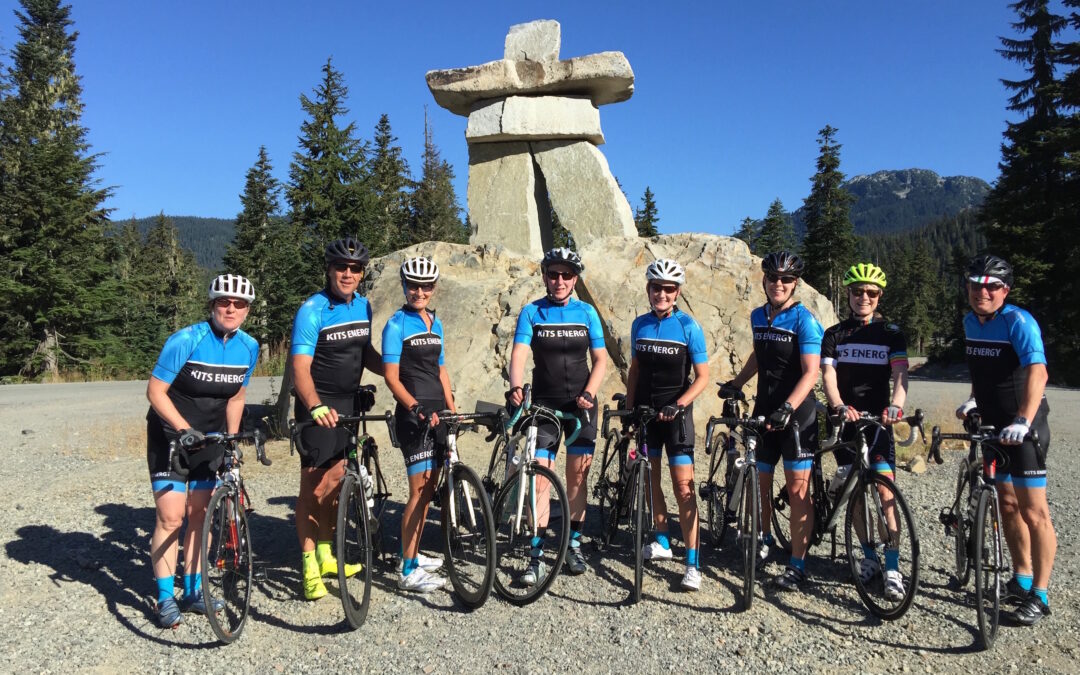
Joining a group like the Kits Energy Cycling Club where you ride with a group of people, knowledgeable coaches, and a training program designed to train you towards your goal covers all your bases. The group will motivate you to ride and give you plenty of opportunities to practise your group riding skills. The NCCP certified coaches will teach you all the skills you need to get you across the finish line and keep you accountable to training every week. The monthly training programs are made specifically for your level and with your goals in mind so that you progressively increase in distance and intensity each week.
The downside is that you have to be available for the day of the week that your group rides and coordinate the other training rides on your own.
Generic Online Training Program
If time is a major roadblock to training, you might want to look for a more flexible option such as an online training program. This is the cheapest option as you only pay for one program or you can even use one of the free programs online. Now you can choose whenever you want to ride and who you want to ride with.
The downside to this is that you are using a generic program that may be too easy or too hard for you. You also don’t have the advantage of learning from others, either in a group or from a professional.
Whatever method you choose; personal coach, club or online, any choice is better than no choice at all.
One of the ways you become a better cyclist is through muscular adaptation. In very basic terms, this is what happens: The stress of training causes micro tears in your muscles. Your body then repairs the damage, which results in an inflammatory response (the swelling and tenderness you feel after a hard workout or race). The rebuilding process that follows creates stronger muscles—but onlyif the body has adequate time to heal. If you start your next hard ride when you’re not completely recovered your body is at a disadvantage. If you do this too many times you’ll grow more tired and gain less from each workout.
But recovery isn’t just about sitting on the couch with your legs up. It’s also about not going hard all the time and using rest days wisely. Strategies like low-intensity rides, stretching, yoga and massage will help your muscles recover faster.
10 ways to maximize every minute you spend in—and out—of the saddle.
1. The harder the workout = the more recovery time you will need. Generally speaking 48hrs should be enough, unless you made a huge jump in your training volume/intensity or you a hard race. Then you may need an extra day or two before you jump back into training.
2. To help your legs recover: elevate them, ice them or wear compression tights right after a hard/long ride.
3. Ride a short (45-60min) recovery ride the day after an intense ride. Keep your recovery rides light and easy, spinning the legs with very little intensity.
4. To replace the lost glycogen, eat immediately after all hard/long rides. Mainly carbs with only a small amount of protein and fat.
5. Stretch hip flexors, quads and hamstrings on a regular/daily basis.
6. Use your time off the bike to cross train with swimming or weight training focusing on core and upper body only. Keep the weights light on the legs. Hard leg training is best done in the off season.
7. Your body is trying to heal from the moment you get off the bike until you get back on again so plan meals ahead of time so you are eating every 3hrs, fuelling the fire.
8. Muscles do most of their repair during sleep. Get at least 8 hours of sleep on a regular basis.
9. If you are suffering from fatigue, frequent colds/flu, frequent injuries or just general fatigue, it may mean that you are overtraining. Take a few days off and ease back into it slowly.
10. Increase volume and/or intensity by only 10% each week.
If you haven’t heard this saying before and you have a race coming up within the next two or three weeks, I want you tape this sentence on your bike and read it before every ride.
Most people are procrastinators. Whether you are preparing for an important presentation or training for a big ride, most people will wait until the last few weeks before they start to get serious. When it comes to mental projects, your brain is very malleable and you can quickly cram it with all the information you need. But your body doesn’t work that way. It takes months to build a training base and many more months to build speed and power, on top of that base.
All this information shouldn’t be new to you, but I’m reminding you again because, with less than a month left in the season, what you do now can make or break your entire season.
If you haven’t completed your long rides over the last few months and have been skipping your intensity workouts, I’m sorry but cramming in extra rides during the last few weeks will do you more harm than good.
The purpose of training is to break the body down gently, allow it to recover and grow stronger. Trying to speed up this process means that you will miss the recovery and getting stronger part. On Fondo day, you will arrive feeling burnt out, tired and possibly injured.
Instead of throwing in the towel, you can still salvage the ride with less than optimal training if you follow these five tips:
1. Get lots of sleep and recovery time so you arrive on race day feeling refreshed and mentally ready for a hard ride day.
2. For the two weeks leading up to race or ride don’t add in any extra training sessions in addition to what is on your training program. Or talk to your coach about foregoing the taper to continue training up until the event.
3. During the ride, take it easy and don’t try to race the event. Keep your heart rate low and take as many breaks as you need at the rest stops. If your body isn’t accustomed to riding the distance you will fatigue simply from being on the bike for this extended amount of time.
4. Readjust your expectation. Possibly use the event as a training ride to prepare you for the next one.
5. Have fun and enjoy the day. Remember that any day on the bike is a good day.
2. For the two weeks leading up to race or ride don’t add in any extra training sessions on top of what is on your training program. Talk to your coach about discuss how to skip the taper and continue training until the event.
3. During the ride, take it easy and don’t try to race the event. Keep your heart rate low and take as many breaks as you need at the rest stops. If your body isn’t accustomed to riding the distance you will fatigue simply from being on the bike for this extended amount of time.
4. Use the event as a training ride to prepare you for the next one.
5. Have fun and enjoy the day. Remember that any day on the bike – is a good day.
If you haven’t changed a flat yet, now is the time to add learning and practicing it into your training schedule this week! And yes there will be a test but it will be on the road when you least expect it.