Stop acting like an amateur and start acting like a pro.
An amateur is a person who engages in a pursuit on an unpaid rather than a professional basis.
Think about your current mode of employment, or job that you must do because someone else’s life depends on it.
You show up every day.
When it is cold, wet, and raining, you show up.
When you are tired and would rather watch Netflix, you show up.
When your best friend is in town for just one day, or it is your partner’s birthday, you may leave early, but you still show up.
Every morning you don’t wake up and contemplate whether or not you will decide to fulfill your responsibilities today.
You just do it.
In addition, while working you don’t typically suffer from feelings of guilt, laziness, or think you are wasting time as often happens when an amateur attempts to take an hour away from “their job” to paint, run, cook, bike, write, or play their instrument.
So what do you think would happen if you applied that same philosophy to your next goal?
With every goal comes massive resistance. Even if it is something that we desperately want, we will find every excuse to procrastinate, delay, or self-sabotage. By eliminating the choice of whether or not you will show up, you also remove the opportunity for that resistance (in whatever form of excuse it looks like) to stop you from doing the work required to achieve your goal.
Treat your goals as if your profession depended on achieving them.
Don’t think about whether you want to do it; just do it.
BUT, there is one caveatthat you need to consider.
Many people already have more jobs than they can handle.
Think about which responsibilities in your life are non-negotiable.
Beyond the employment that makes you money, your list of non-negotiable responsibilities, jobs, or goals may include:
raising children
attending to elderly parents
starting a new exercise program
volunteering in the community
serving as a board member
pursuing your love for music or art
learning a new skill
engaging in a sport or several sports
playing on a team
learning to become the next Top Chef
losing weight
renovating your home
dealing with an illness or injury
traveling for work or pleasure
It is impossible to continue adding more jobs to the list without getting burnt out and ultimately failing at all of them.
If you are someone who overextends themselves, you will need to review your current list and evaluate which responsibilities can be put on hold or delegated, while you work on achieving your new goal.
Once you have narrowed down the list into something that is both manageable and realistic, add your new goal to the top of the list and the rest will fall into place.
If your “profession” is to become a 50+ road cyclist and finish a fondo before x amount of time, then you will need to do what a professional 50+ rider would do. You need to sleep, eat, rest, recover, and train like a cyclist. Every day you need to do something that gets you closer to your goal of becoming a professional 50+ fondo rider.
Remember, this is your job. It is non-negotiable. Now stop thinking about it and go and do it.
The availability of both bike parts and bike mechanics are still feeling the squeeze of covid. Which means that doing some minor bike maintenance is necessary if you want to keep your bike on the road this summer.
Since your chain is your bike’s most “at-risk” part and an essential component, I feel that it deserves an entire newsletter on how to care for it..
In general, you should lubricate your chain whenever it squeaks or appears “dry.” But taking the extra time to clean and lube after wet rides will help keep your chain from rusting. It is a simple task but often gets forgotten, especially when we are cold and wet and just want to get into the shower.
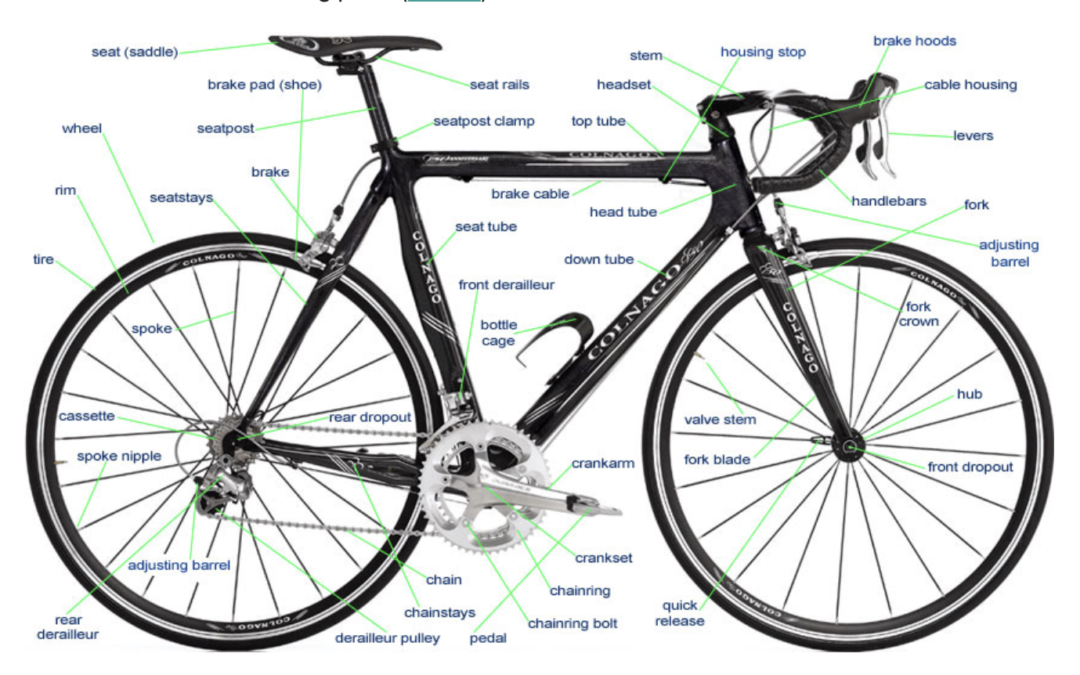
To clean a chain that doesn’t have too much built-up grime, simply use a rag and degreaser. For really dirty chains, you may need to use a chain cleaning device that is more thorough and a lot less messy. Once you have cleaned the chain, you also need to clean the bike parts it comes in contact with, the front chainrings, rear cassette, and rear derailleur. See photo above if you are unsure of which parts I’m talking about. Scrub the front chainrings and rear derailleur with a brush and degreaser while turning the pedals (moving the chain). For the rear cassette, take off the rear wheel and wipe away any remaining dirt by flossing between the gears/cogs.
After the degreaser has dried, apply drops of lube slowly onto the chain, getting some on each link. Run the chain through all the cogs. Let the lube dry, then wipe off any excess lubricant, so it doesn’t attract more dirt. .
Cleaning and lubricating your chain frequently will help slow down the rate of chain wear. But even the most meticulous rider will need to replace their chain eventually. The more you ride, the sooner you will need to replace it. This bit of maintenance may seem costly, but it is much cheaper than the damage it could cause if you don’t. If you can get your hands on a spare chain now, take it! At some point, you will need it.
What happens if you don’t change your chain when you should?
If you continue to ride with an old chain, even if it is clean, it will start to grind away at the metal on your front chainrings and rear cassette. Over time, the chain and gears will grind out new grooves that a new chain won’t be able to match. This is not a good thing. You are now beyond the point of no return, and you will need to replace all three together. Your cheap $60-$150 replacement chain may cost you $500 or more, depending on what you parts you need to replace.
If you want to avoid this mistake, ask your bike shop to measure the chain to see how much wear it has left. When you bring your bike in for a tune-up, they should do this for you. They will let you know how much life you have left in your chain. If they don’t say anything – don’t assume that it is OK – ASK!
Every event is tough when you are pushing yourself to achieve a personal best. But when the weather turns sour and never lets up, it adds one more element of pain to the day. These are the days that build resiliency and character as an athlete. These are the days that you will never forget. Saturday July 16th 2022 was one of those days. I am so proud of all the riders, and especially the Kits Energy riders, who remained positive and smiling despite how cold they were. They rode 75km and climbed 2300m up into the wet and cold clouds. We had a large group of Kits Energy riders in the Triple Crown for Heart event and we were also among some of the fastest riders!! No matter what time you finished in, everyone should be proud of themselves for completing such a big event, on a mentally and physically challenging day.
Connie, Jack, Kristina, and Matthew starting our climb up Cypress Mountain
A huge thank you to Dominik Szopa, Marie Campbell, Fiezel Babul, and all of the other board members and volunteers who helped put this event together. The emergency blankets at the end were a very smart idea! In total, the event raised $30,000 for BC Children’s Hospital, Pediatric Cardiac Care.
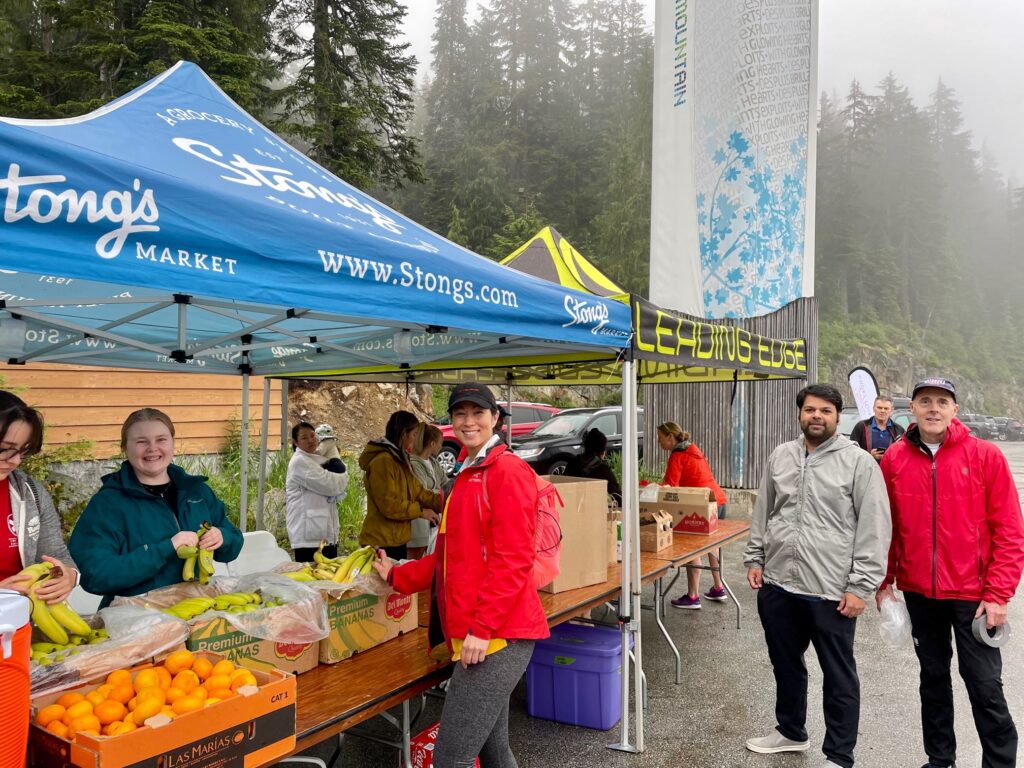
Setting up the post ride snack table at the top of Cypress MountainDominik Szopa (helped organize and also rode the event!!) and Facundo Chernikoff
Congratulations to Paul Towgood and Grant Bullington (who is also our KE sponsor from StretchLabs) who both finished first, along with two other riders, in a time of 3:09!!!! That’s crazy fast!
Grant and Paul at the starting line
Lynda McCue finished in the second fastest group, in a total time of 3:53 and won the prize of a stuffed lion for first female finisher. Another crazy fast time.
Riding in a fondo or an organized event is much different than a weekend long ride.
If your goal is to make the most of the perks, like closed roads, fantastic food stops, and beautiful scenery, then your ride time will likely be slower and you will be out in the elements longer as you soak it all in.
If your goal is to use the event as an opportunity to push yourself to achieve a Personal Best (PB), then you will need to prepare for that type of intensity.
Pacing yourself is essential to having a successful day, whichever way you decide to ride..
#1. Learn the route
You need to know the route before planning your overall pacing strategy. Can you use up all your matches, knowing that the last 40km is a downhill coast, or do you need to save some? Are you drafting or riding alone? Where are the rest stops? How many will you use and when?
#2. Draft – or not
Watch your speed when riding in the middle of the back of the pack. If it feels comfortable and you are riding way faster than you ever have – enjoy the ride! Don’t get fooled into thinking you can ride faster and waste energy pulling at the front. Take the opportunity to cruise and recover. If you are faster (than the group you are in), wait for a smaller group to break away at the front and go with them, or wait for a faster group to catch up.
#3. Know yourself
Knowing and listening to your body is more complicated than it sounds. The body can fool even the most experienced riders; therefore, you need to plan the following ahead of time:
1. What, how much, and how often will you eat and drink?
2. How often can you push into Zone 4/5 without blowing up?
3. How many breaks do you need and for how long?
4. If you “feel” like the pace is relaxed or see that your power output is low – is it really too slow? Refer back to #1 and 2.
#4. Patience, Practice, and Perseverance
Learning how to pace is not easy, and the more gadgets you have, the more complicated it gets. Executing the perfect pacing strategy takes time, practice, and patience.
If you want to learn more about pacing, how to use a power meter (or heart rate monitor) and other training tips, I suggest the following books:
The Power Meter Handbook by Joe Friel
Training and Racing with a Power Meter by Hunter Allen and Andrew Coggan
A term used to refer to the clips and pedals that have replaced the earlier system of toe clips and straps. In a clipless pedal system, the pedal has a mechanism that locks it to a cleat screwed into the underside of the shoe.
All road riders, wanting to ride in an organized group ride, must be comfortable riding with clipless pedals.
For this reason, our first lesson in the Intro to Riding group is learning this skill.
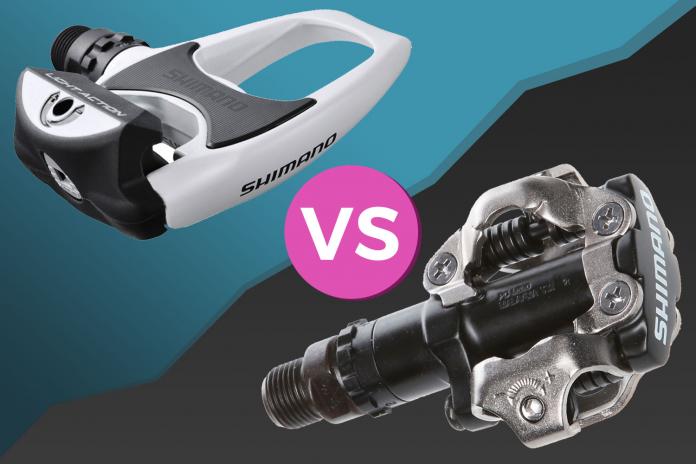
There are two main types of pedal and cleat combinations: Shimano SPD & Shimano SPD-SL.
Casual riders, commuters, and mountain bike riders should chose Shimano SPD as the shoes are more comfortable and easier to walk in and the cleat works well in muddy conditions.
Road cyclists and long distance riders should chose Shimano SPD-SL as you will be able to generate more energy through the pedal.
If you have the money and plan on riding a lot, it is well worth it to upgrade to carbon soles. You may have your shoes for at least 10 years and the carbon soles will make your ride more comfortable.
The following is list of pros and cons for each type.
Shimano SPD
great for commuting, gravel riding, mountain biking, recreational riders
can clip into both sides
easier (to learn how) to clip in and out, especially since you can choose a pedal with a wider base
easy to walk in the cleat is either recessed or the shoes have
less contact with the shoe which reduces performance as less power is transferred to the pedal
may be less comfortable for longer distances (3+hours)
both negatives are also highly dependant on your shoe choice as well
+ 2 bolt cleats made of metal (heavy but durable and works well in muddy conditions)
Shimano SPD-SL
most common road bike cleat
has the most contact with the shoe which transfers more power to the pedal
SL stands for super light
difficult to walk in as the cleat is larger and makes first contact with the ground
single sided so it takes some people a bit longer to learn how to clip in
+ 3 bolt cleats made of plastic (light but less durable and does not work well in mud)