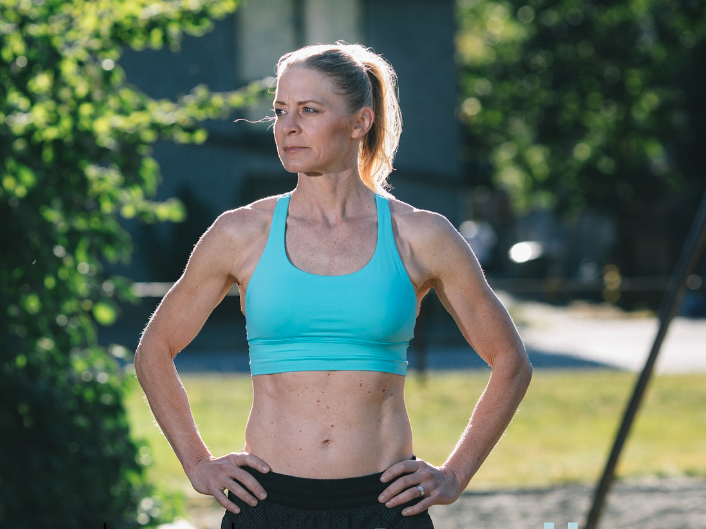
Stop acting like an amateur and start acting like a pro.
An amateur is a person who engages in a pursuit on an unpaid rather than a professional basis.
Think about your current mode of employment, or job that you must do because someone else’s life depends on it.
You show up every day.
When it is cold, wet, and raining, you show up.
When you are tired and would rather watch Netflix, you show up.
When your best friend is in town for just one day, or it is your partner’s birthday, you may leave early, but you still show up.
Every morning you don’t wake up and contemplate whether or not you will decide to fulfill your responsibilities today.
You just do it.
In addition, while working you don’t typically suffer from feelings of guilt, laziness, or think you are wasting time as often happens when an amateur attempts to take an hour away from “their job” to paint, run, cook, bike, write, or play their instrument.
So what do you think would happen if you applied that same philosophy to your next goal?
With every goal comes massive resistance. Even if it is something that we desperately want, we will find every excuse to procrastinate, delay, or self-sabotage. By eliminating the choice of whether or not you will show up, you also remove the opportunity for that resistance (in whatever form of excuse it looks like) to stop you from doing the work required to achieve your goal.
Treat your goals as if your profession depended on achieving them.
Don’t think about whether you want to do it; just do it.
BUT, there is one caveatthat you need to consider.
Many people already have more jobs than they can handle.
Think about which responsibilities in your life are non-negotiable.
Beyond the employment that makes you money, your list of non-negotiable responsibilities, jobs, or goals may include:
raising children
attending to elderly parents
starting a new exercise program
volunteering in the community
serving as a board member
pursuing your love for music or art
learning a new skill
engaging in a sport or several sports
playing on a team
learning to become the next Top Chef
losing weight
renovating your home
dealing with an illness or injury
traveling for work or pleasure
It is impossible to continue adding more jobs to the list without getting burnt out and ultimately failing at all of them.
If you are someone who overextends themselves, you will need to review your current list and evaluate which responsibilities can be put on hold or delegated, while you work on achieving your new goal.
Once you have narrowed down the list into something that is both manageable and realistic, add your new goal to the top of the list and the rest will fall into place.
If your “profession” is to become a 50+ road cyclist and finish a fondo before x amount of time, then you will need to do what a professional 50+ rider would do. You need to sleep, eat, rest, recover, and train like a cyclist. Every day you need to do something that gets you closer to your goal of becoming a professional 50+ fondo rider.
Remember, this is your job. It is non-negotiable. Now stop thinking about it and go and do it.
Earlier this year, we had a live Q & A with Jennifer Thompson from Herstasis.com, which was highly informative and answered many of the questions women have about menopause.
Some women will pass through this stage without skipping a beat, while others may suffer terribly.
If you are suffering from new and uncomfortable symptoms, first rule out the possibility that they are not a sign of something more serious. Once your symptoms are diagnosed as peri-menopausal, you may need to make some lifestyle changes, at least until you get through it.
In this interview and the Herstasis website, we discuss hormone replacement, natural alternatives, and other coping methods. We are not promoting any particular method nor should you feel judged for making the choices you need to live your best life.
Wherever you are, please know that you are not alone.
Unfortunately, there is a lot of misinformation and a general lack of research on menopause. If you are looking for a good article to familiarize yourself with the history and where we are at today with the research, please read this article from the New York Times.
Let’s try to be kind to ourselves during this time. Becoming informed is a good place to start.
Please click on the following to view the one hour video with Jennifer Thompson.
Strengthening this “red zone” is one of the keys to improving your performance and remaining injury-free for every sport. Your power comes from the core.
These muscles stabilize your torso and provide the base on which you can build power and strength. It doesn’t help to have strong legs if you have a weak core.
Twice a year I offer an AB CHALLENGE series and I hope you will join me. I need to clarify that this challenge focuses purely on ABS; however, it is imperative that you use your core to complete the exercises.
In my workouts, I talk about the pelvic floor. Contracting the core is not the same as holding your breath or sucking in your belly. Both of these actions are dangerous when strength training as they increase intra-abdominal pressure, which is not good.
Check with yourself. Do you know how to hold your core? If not, please repeat this glute and core maintenance video once a week until you feel comfortable with this action and can activate the core with awareness, then automatically when required.
Yes, everything highlighted in red makes up your coreSucking in or holding your breath increases intra-abdominal pressure which is not a good thing.
My husband, Duncan, and I have been training with Kristina for over 10 years and goodness knows where we’d be without her! Prior to the pandemic, we worked out in the gym in private sessions and in group classes. We have also participated in her cycling club. No matter what the format, I am consistently impressed at the many ways Kristina can disguise a squat! All kidding aside, the variety of activities, techniques and movements she brings forward and her overall coaching (programming how/when to train certain muscle groups, nutrition, breathing exercises, meditation, mobility, guidance on equipment and apparel, etc.), keep us healthy, engaged and motivated.
We decided to train with Kristina because of her extensive knowledge of the body, her focus on form and her adaptability around injuries. Duncan has a history of lower back issues and I struggle with carpal tunnel and occasional asthma. Because of these issues, we worried that we might do the wrong exercises or do them in a way that would exacerbate the problems. With Kristina leading the workouts, we know we’re in good hands. No matter what the movement, she’s always able to adapt to our present ability. To our delight, moving to an online format during the pandemic hasn’t affected her ability to correct our form or suggest adjustments.
We feel tremendously lucky to be working with Kristina. She is a wonderful coach, knowledgeable and always seeking to grow her knowledge base. Her style is supportive and encouraging, never bombastic or over the top. She gets to know you, what you are capable of in the moment, and what you can grow to achieve.
Research shows that a loss of sweat equal to ONLY 2% of body weight greatly affects your performance through a decrease in power, an increase in muscle fatigue, and the inability to recover and build muscle. There is an excellent article on the Sports Cardiology BC Websitewhich I highly encourage you to read as it will forever change the importance you place on your hydration plan. If you are short on time, here is my bullet-point summary.
So what happens to performance when you are dehydrated?
A reduction of blood volume = lower Maximal Aerobic Power (V02 Max)
Increased core temperature = increased rate of glycogen breakdown in the muscles. This, in turn, leads to a greater amount of lactic acid which = muscle fatigue.
Increased levels of cortisol = lower levels of testosterone aka the muscle-building hormone which is required for recovery and growth.
5 hydration tips that will help improve your performance
1. Create a habit of drinking 300 to 500ml of water every morning when you first wake up. If you had a few alcoholic drinks the night before, add lemon and a pinch of salt and an additional 500ml.
2. Consume at least 300 to 500ml of water 1 to 2 hours before your ride/endurance workout. This is particularly important on hotter days.
3. Replace fluid loss with both water and electrolytes. Evidence shows that hydrating with just water doesn’t replace lost electrolytes, such as sodium, potassium, calcium, magnesium, and chloride resulting in a dramatic drop in performance. Use a richer mix during the winter (because you are drinking less) and a weaker solution during summer (because you’ll be drinking more).
4. During the ride, drink before you get thirsty. Take small sips every 10 to 15mins whether you want to or not. Ideally, you should aim to drink 1.25 to 1.5 litres of fluid every hour, depending on your body size and how much you sweat. NOTE: For some, this still might not be enough on really hot days.
5. Experiment and find what works for you.
EXCEPTIONS TO THE RULES
1. During short, intense workouts, such as the weekly Kits Energy workouts, limit your water intake immediately before and during the workout to avoid gastric upset.
2. On cold days avoid consuming large amounts of fluids in the morning as your body will want to reduce the supply of blood going around your body. It will do this by making you want to pee it out as soon as you get your cycling bibs tucked in nicely under all those layers.
WARNING If you feel faint, dizzy, or start to get a headache please stop, seek shade and medical assistance ASAP. Dehydration is a serious issue for athletes and can lead to death.